
 This is an image of our actress Nicole. This is the costume she is going to be wearing in our thriller. I think the image of the femme fatale we have created is very effective.
Sunday, 21 December 2008
Costume - Continued.
This is an image of our actress Nicole. This is the costume she is going to be wearing in our thriller. I think the image of the femme fatale we have created is very effective.

Tuesday, 16 December 2008
Evaluating the mise-en-scene in The Shining.
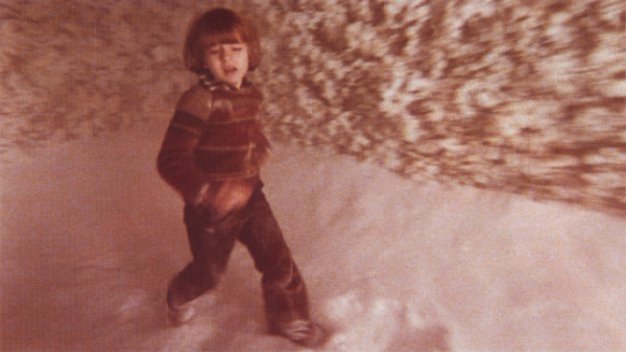

This is the scene towards the end of 'The Shining' where Danny is escaping through the maze in order to get away from his maniac father. Stanley Kubrick utilised many generic codes and thriller conventions in this scene to create suspense and to attract the auience's attention.
Sound:
Diagetic:
Heavy panting, breathlessnessFootsteps, crunching of the untouched snow
Non-Diagetic:
Threatening background music,
Very loud, creates tension and excitement.
Lighting:
Shone from below the hedges, creates an eerie, dark, gloomy scene.
Lights up all the pure white snow, makes it look heavenly
Bright surroundings compared to the dark shape of the boy.
Location:
A maze. Creates sense of entrapment, can easily get lost, nowhere to hide, dangerous- have to be aware of every opening around you, dead-ends – cause people to get stuck and have to turn back and change direction.
A lot of snow – not ideal conditions for running/escaping in, and makes it hard to see where you are headed.
Costume:
Not ideal for being out in freezing conditions, just a jumper, trousers and shoes. No props used by the boy.
Camera Angle:
Audience can only see behind the boy, can’t see where the boy is headed. Means audience can see if anyone is following him and can see what the boy can’t see. Mid-shot. Character in the centre of the frame, running towards the camera.
Signifiers of Location:
Extreme amount of snow – scene shot somewhere cold – around winter time.
Monday, 15 December 2008
The Mass Manipulation Model
-The idea that the media might be a powerful social and political force momentum in the 1920's and 30's. (Shown in the political propaganda of Soviet Russia and Nazi Germany semed able to seduce and persude citizens in ways not possible prior to mass media.)
-Audiences seen as a mass of individuals that could be persuaded and influenced ("The Hidden Persuaders" book (1957) attempted to uncover some subliminal advertising techniques.)
-Media has been accused of corrupting young audiences. (1950's rock and roll, mysogynism, glorifying of guns and gangs through rap and hiphop.)
-Action from the BBFC. (This was particularly evident when the murder of James Bulger was linked to "Childs Play 3").
-Bendure and Walters. (The 'Bobo doll' experiments suggest children might imitate violent behaviour after being exposed to it. However this was criticised for not reflecting normal viewing conditions, also now children can distinguish between real and stimulated violence.)
-Drug Metaphors. (Marie Winn's book "The Plug In Drug" (1997), suggests that children watch television in a 'trance' having a 'glazed, vacous look'.
The relevance of the Mass Manipulation Model is limited in today's age of advanced media technology. Audiences are now more active rather than passive and more 'media savvy'. Audiences are aware of media manipulation and have more choice and control over how they consume media. However we should still not underestimate the power of media!
-Audiences seen as a mass of individuals that could be persuaded and influenced ("The Hidden Persuaders" book (1957) attempted to uncover some subliminal advertising techniques.)
-Media has been accused of corrupting young audiences. (1950's rock and roll, mysogynism, glorifying of guns and gangs through rap and hiphop.)
-Action from the BBFC. (This was particularly evident when the murder of James Bulger was linked to "Childs Play 3").
-Bendure and Walters. (The 'Bobo doll' experiments suggest children might imitate violent behaviour after being exposed to it. However this was criticised for not reflecting normal viewing conditions, also now children can distinguish between real and stimulated violence.)
-Drug Metaphors. (Marie Winn's book "The Plug In Drug" (1997), suggests that children watch television in a 'trance' having a 'glazed, vacous look'.
The relevance of the Mass Manipulation Model is limited in today's age of advanced media technology. Audiences are now more active rather than passive and more 'media savvy'. Audiences are aware of media manipulation and have more choice and control over how they consume media. However we should still not underestimate the power of media!
Shooting Schedule
Due to various complications, our filming group has been limited to specific filming dates. However we are two thirds of the way through completion of the shoot.
Monday 1st December
Shoot went well, more complicated than we'd originally hoped it would be, most of the shoot tackled yet re-runs needed.
Monday 8th December
Shoot went extremely well. Majority of storyboards shot.
Monday 15th December
Unfortunately due to illness, this shoot had to be cancelled. We are hoping to book out the cameras again this week, yet if they are fully booked we will have to negotiate an extension.
Monday 1st December
Shoot went well, more complicated than we'd originally hoped it would be, most of the shoot tackled yet re-runs needed.
Monday 8th December
Shoot went extremely well. Majority of storyboards shot.
Monday 15th December
Unfortunately due to illness, this shoot had to be cancelled. We are hoping to book out the cameras again this week, yet if they are fully booked we will have to negotiate an extension.
Working Title Productions: Basic Information
Working Title is a British Film Company. It has produced many popular films, including 'Atonement', 'Pride & Prejudice' and, a personal favourite, 'Love Actually'. Working Title is successful internationally, helped along by alteration to marketing, including deals with American and European companies and worldwide distribution.
Working Title's chairpersons are Tim Bevon and Eric Fellmer, who are listed as the most powerful figures in British Industry, and also ranked 41st in the world-wide-movie power list. Bevan had founded Working Title in 1984 with Sarah Radcliffe. However in 1992 Radcliffe left whilst Bevan was looking for a corporate backer, and Fellmer soon joined him. It has been said that, 'The films were suffering because there was no real structure, and, speaking for myself, my company was always virtually bankrupt.' This is true, as film-making as a high risk business, and is very expensive.
The 1st film that Working Title produced was My Beautiful Launderette in 1985. Working Title liked to tackle controversial topics for specific audiences, however nowadays targets a wider audience. It creates British Ideology (Four Weddings and a Funeral), and now produces bigger budget films (Briget Jone's Diary). Their films have gone from 'niche' appeal, to mainstream.
Working Title are committed to 'high quality' films, yet are also committed to low-budget films with new writers.
Working Title's chairpersons are Tim Bevon and Eric Fellmer, who are listed as the most powerful figures in British Industry, and also ranked 41st in the world-wide-movie power list. Bevan had founded Working Title in 1984 with Sarah Radcliffe. However in 1992 Radcliffe left whilst Bevan was looking for a corporate backer, and Fellmer soon joined him. It has been said that, 'The films were suffering because there was no real structure, and, speaking for myself, my company was always virtually bankrupt.' This is true, as film-making as a high risk business, and is very expensive.
The 1st film that Working Title produced was My Beautiful Launderette in 1985. Working Title liked to tackle controversial topics for specific audiences, however nowadays targets a wider audience. It creates British Ideology (Four Weddings and a Funeral), and now produces bigger budget films (Briget Jone's Diary). Their films have gone from 'niche' appeal, to mainstream.
Working Title are committed to 'high quality' films, yet are also committed to low-budget films with new writers.
Subscribe to:
Posts (Atom)